Reduce safety risks associated with homeworkIntelligent equipment replaces manual labor in entering high-altitude, water-crossing, enclosed, and high-risk areas, eliminating safety accidents such as falls, drownings, collapses, and falling objects from the source, ensuring the personal safety of operators.

Enhance monitoring coverage and efficiencyAchieve 24/7 uninterrupted comprehensive monitoring, ensuring no dead zones and covering the upper structure, underwater foundation, and concealed components; AI automatically identifies, analyzes, and reports, significantly enhancing inspection efficiency and significantly reducing the rates of missed and false inspections.

Realize proactive early warning of hidden dangersThrough multi-source data fusion analysis, we can accurately capture minor deformations, early-stage diseases, and abnormal operating conditions, enabling a shift from reactive repair to proactive prevention. Early warnings of high-risk hazards can be issued, allowing sufficient time for maintenance decisions and traffic control.

Reduce the total lifecycle operation and maintenance costsReduce expenses related to manual inspection frequency, on-site surveys, scaffold setup, and traffic control; precisely locate defects, implement targeted maintenance, avoid blind repairs, extend the service life of bridges, and reduce long-term operation and maintenance costs.

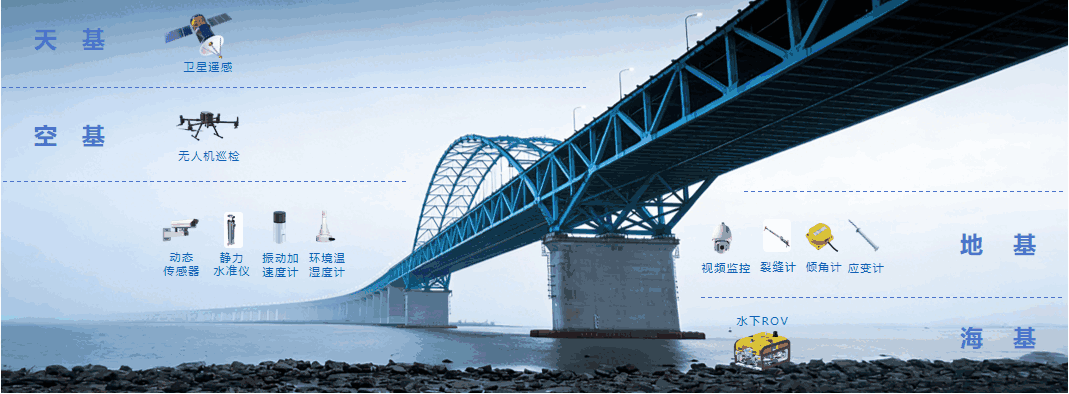
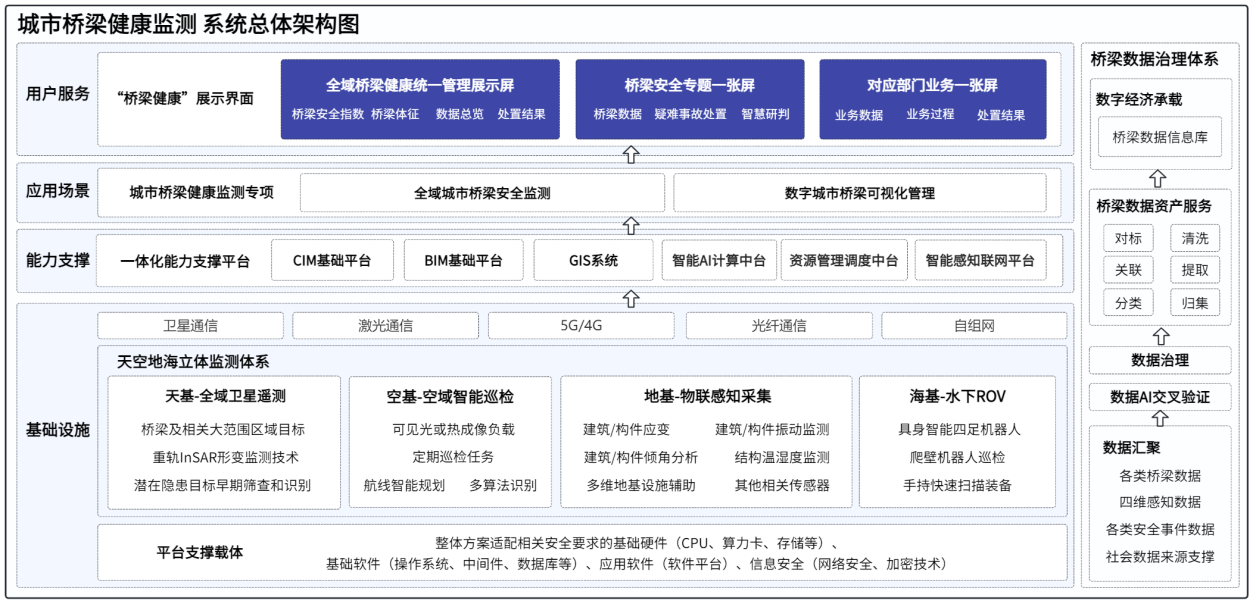
Support digital management of bridgesEstablish an integrated "sky-air-ground-sea" monitoring system, break down data barriers, and achieve health management throughout the entire lifecycle of bridges; ensure data traceability, analyzability, and shareability, supporting the digitalization and intelligent upgrading of transportation infrastructure.